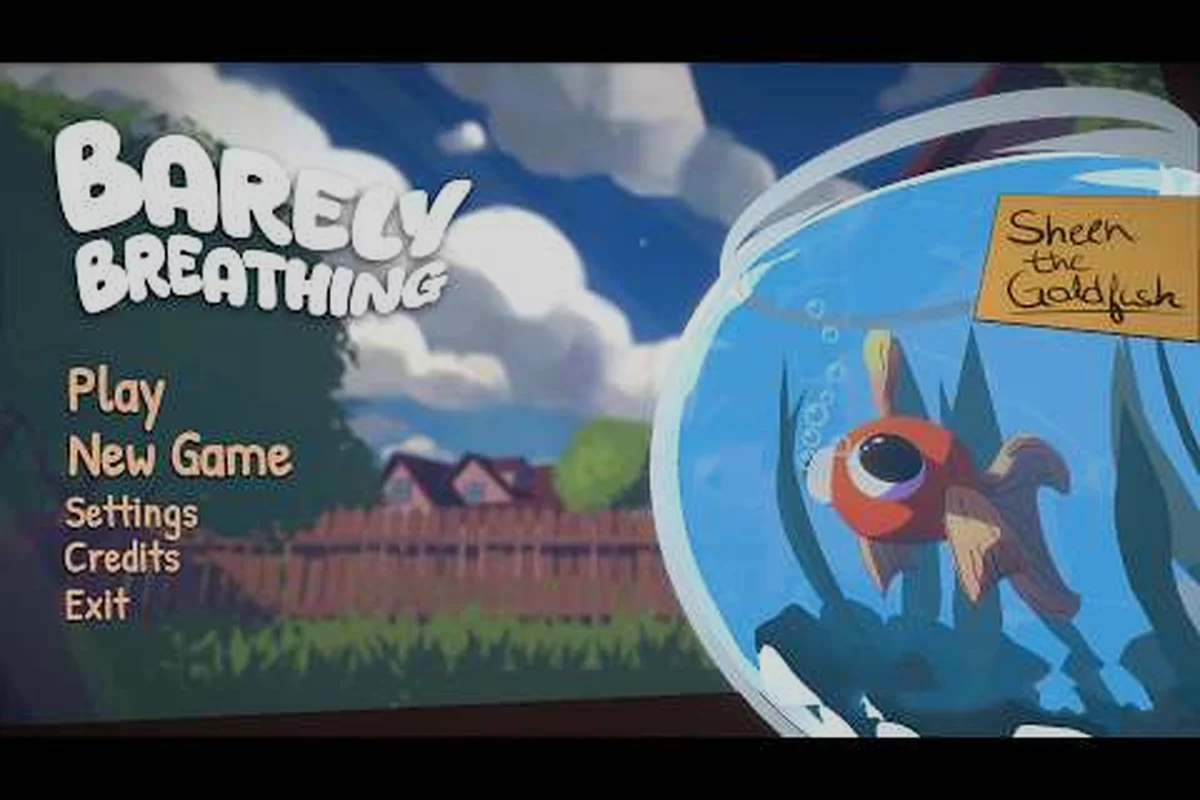
The barely breathing puddle mechanics are the heart of this 3D physics-based puzzle platformer, turning every spilled drink and knocked-over object into a playable path. When the demo update introduced dynamic puddles that react to the environment, it fundamentally changed how players approach each room — because water isn't just decoration, it's your lifeline as Sheen the goldfish. Understanding these reactive puddles means the difference between hopping across a living room with confidence or flopping helplessly on dry carpet.
For those struggling to keep a puddle alive long enough to matter, the same life-or-death stakes apply to your progress—check out how the Barely Breathing Save System handles last-second recoveries.
The Core Puddle System and How Water Behaves
The puddle system in Barely Breathing operates on a simple but elegant principle: water spreads, flows, and evaporates based on the surface it touches. When you use the Surface Spill Ability on a flat floor, the liquid forms a wide, shallow pool that gives you maximum movement range. But spill that same water on a sloped surface, and gravity takes over — the puddle stretches thin, creating a narrow trail that might not give you enough moisture to reach your next jump.
What makes the barely breathing puddle mechanics so distinctive is the reactive nature of every liquid source. The developer's demo update notes confirm that puddles respond to environmental factors in realistic ways, which means you can't just dump water anywhere and expect it to work. The game tracks the volume of liquid, the angle of the surface, and the absorbency of the material beneath you.
| Surface Type | Puddle Spread | Evaporation Rate | Best Use Case |
|---|---|---|---|
| Hardwood Floor | Wide, even spread | Slow | Primary travel paths |
| Carpet | Absorbs quickly | Fast | Emergency moisture only |
| Tile Surface | Medium spread | Medium | Kitchen and bathroom areas |
| Sloped Surface | Narrow trail | Medium | Directional water routing |
| Furniture Top | Contained pool | Slow | Strategic repositioning |
The water volume system works on a depletion model — every jump, flip, and splash consumes a small amount of your current puddle. According to player reports from the demo, a standard puddle from a full glass gives you roughly 15-20 jumps before it thins out completely. That's why the barely breathing mess system encourages you to think ahead: you're not just making a mess for fun, you're creating infrastructure for your escape route.
Tea and Coffee Spills: The Reactive Liquid Difference
The most interesting layer of the barely breathing puddle mechanics comes from the liquid type differentiation. When the demo update shipped, the developer specifically highlighted that using Surface Spill on tea or coffee creates accurate puddles instead of regular water puddles. This isn't just a cosmetic change — different liquids behave differently under the physics engine.
Tea puddles spread slightly slower than water but maintain their volume longer, making them excellent for stationary platforming sections where you need to bounce repeatedly in one area. Coffee puddles evaporate faster but give you a brief speed boost when you jump from them, which speedrunners have already started exploiting in the demo. The trade-off between liquid types adds a strategic layer to the barely breathing reactive puddles that wasn't present in the initial release.
Liquid Properties Comparison
| Liquid Type | Spread Speed | Evaporation Time | Movement Bonus | Best Scenario |
|---|---|---|---|---|
| Regular Water | Fast | Medium | None | General traversal |
| Tea | Slow | Long | None | Stationary bouncing |
| Coffee | Medium | Fast | Brief speed boost | Speedrun sections |
| Mixed Liquids | Variable | Variable | Depends on ratio | Experimental routes |
The mixed liquid mechanic is something the community discovered through experimentation. If you spill tea and then water on the same spot, the puddle combines properties — you get tea's slow evaporation with water's spread rate. Players have reported that this creates a more forgiving puddle for difficult platforming sections, though the exact ratios matter. A 50/50 mix seems to be the sweet spot based on community testing, but you'll need to experiment with your own playstyle.
How to Make a Mess: Object Physics and Environmental Interaction
Learning how to make a mess in Barely Breathing goes beyond just spilling drinks. The object physics system lets you knock over objects to create new water sources or redirect existing puddles. The barely breathing knock over objects mechanic is deceptively simple — you bump into things as Sheen, but the results depend entirely on what you hit and how you hit it.
The jump mechanic plays a crucial role here because your approach angle determines the force applied to objects. A gentle bump from the side might just rock a glass, while a full-speed jump onto a table edge sends everything flying. The game tracks momentum, impact angle, and object weight to calculate the resulting mess.
| Object Type | Weight Class | Knock Over Difficulty | Water Yield | Strategic Value |
|---|---|---|---|---|
| Coffee Mug | Light | Easy | Medium | Quick moisture boost |
| Tea Cup | Light | Easy | Medium | Long-lasting puddle |
| Water Glass | Medium | Moderate | High | Best water-to-effort ratio |
| Flower Vase | Medium | Moderate | High | Creates splash zone |
| Cooking Pot | Heavy | Hard | Very High | Large area coverage |
| Fish Bowl | Heavy | Hard | Maximum | Full room saturation |
The barely breathing mess system rewards creative thinking about object placement. According to the Steam store description, the game encourages you to "spill and splash away, make your own path" — which means every object in the environment is a potential tool. The demo's 100% positive reviews consistently mention the joy of "derping and flapping around as a goofy looking fish, trying to find more water to move around the room," which perfectly captures the experimental spirit of the puddle mechanics.
Strategic Object Knockdown Order
For new players trying to understand the barely breathing puddle mechanics, the optimal approach starts with low-effort, high-yield objects. Begin by knocking over the water glass near the couch — it gives you immediate mobility without much risk. Then work toward the tea cup on the side table, which provides a longer-lasting puddle for the more complex jumps. Save the heavy objects like pots and vases for when you understand the room layout, because their knockdown sends water in unpredictable directions.
The jump mechanic becomes your primary tool for object interaction. A well-timed jump onto the edge of a table can tip an entire set of glasses, creating a cascade of puddles that covers multiple platforming routes. Community speedrunners have documented several "mess chains" where a single well-placed jump triggers a domino effect of falling objects, saturating an entire section of the room with usable water.
Surface Spill Direction and Puddle Routing
The surface spill direction mechanic is where the barely breathing puddle mechanics get truly technical. When you activate the Surface Spill Ability, the direction of your movement during the animation determines where the water flows. This isn't just about pointing — the game calculates the liquid's momentum and spreads it accordingly across the available surface.
Mastering spill direction requires understanding the relationship between your movement and the resulting puddle shape. If you spill while moving forward, you create a teardrop-shaped puddle that extends in your travel direction. Spill while stationary, and you get a roughly circular pool. Spill while jumping, and the water splashes outward in a burst pattern that covers more area but with less depth.
| Spill Technique | Puddle Shape | Coverage Area | Best Used For |
|---|---|---|---|
| Stationary Spill | Circular | Small | Precise positioning |
| Forward Movement | Teardrop | Medium | Directional travel |
| Backward Movement | Elongated oval | Medium | Retreat paths |
| Jump Spill | Burst pattern | Large | Area saturation |
| Corner Spill | Triangular | Variable | Filling awkward gaps |
The puddle routing strategy becomes essential in the kitchen section, where the flowing gutters and swinging pots create complex three-dimensional challenges. Players need to route water from the sink area across multiple surfaces to reach the higher platforms. The barely breathing reactive puddles respond to the gutter flow, meaning water spilled in the right spot gets carried along the channel to distant locations.
According to community reports from the demo update, the gutter sections are where the puddle mechanics truly shine. Water spilled into the flowing gutter system travels with the current, creating dynamic paths that change as the water moves. This requires a completely different approach than the static living room puzzles — you're not just creating puddles, you're timing your spills to ride the water flow.
Advanced Puddle Management for Difficult Sections
Once you've mastered the basics of the barely breathing puddle mechanics, the advanced techniques open up entirely new possibilities. The puddle preservation strategy focuses on maximizing the value of every drop of water, which becomes critical in sections where water sources are scarce.
The evaporation timing is the key constraint. Every puddle has a lifespan, and you need to plan your route to use each puddle before it disappears. The demo's living room section is forgiving, but the kitchen and bathroom areas (teased for future updates) will likely require much tighter timing. Players who practice efficient puddle usage in the demo will have a significant advantage when the full game releases.
Advanced Technique: The Puddle Chain
The puddle chain technique involves creating a series of connected puddles that allow continuous movement across a large area. Start by spilling a large puddle, then jump to its edge and spill again while moving forward. This extends the puddle in your travel direction, effectively creating a water path. The barely breathing mess system supports this approach because each new spill adds to the existing puddle rather than creating a separate one.
The jump mechanic integrates with puddle chaining through the splash effect. When you jump from a puddle, you carry a small amount of water with you, which lands as a tiny splash at your landing point. While this splash is too small to create a usable puddle on its own, it can extend the life of an existing puddle by adding a small amount of volume. Skilled players use this to squeeze out a few extra jumps from nearly depleted puddles.
| Advanced Technique | Difficulty | Water Efficiency | Risk Level |
|---|---|---|---|
| Puddle Chaining | Intermediate | High | Medium |
| Splash Extension | Advanced | Medium | Low |
| Object Cascade | Intermediate | Very High | High |
| Gutter Riding | Advanced | Maximum | Very High |
| Mixed Liquid Stacking | Expert | High | Medium |
The gutter riding technique deserves special attention because it's the most complex application of the barely breathing puddle mechanics. In the flowing gutters section, you can spill water into the channel and then jump into the flow, letting the current carry you along. This requires precise timing — jump too early and you miss the water; jump too late and the puddle has already passed. According to the demo update notes, the developer specifically designed these sections to test players' understanding of the reactive puddle system.
Troubleshooting Common Puddle Problems
Even experienced players encounter issues with the barely breathing puddle mechanics, and knowing how to diagnose problems quickly can save you from frustrating restarts. The most common issue is puddle evaporation mid-jump — you start a jump sequence, but the puddle thins out before you complete it. This usually happens when you've been using the same puddle too aggressively without supplementing it.
The solution to evaporation issues is to maintain a mental map of your water sources and their approximate lifespans. If you know a puddle has been active for a while, plan your route to pass by a fresh water source before attempting the difficult jumps. The barely breathing reactive puddles give you visual feedback through their color and size — a thinning puddle becomes more transparent and smaller, signaling that it's time to find new water.
Common Issues and Fixes
| Problem | Cause | Solution |
|---|---|---|
| Puddle evaporates mid-jump | Overuse without supplement | Route past fresh water sources |
| Water flows wrong direction | Incorrect spill technique | Adjust movement during spill |
| Object won't knock over | Wrong impact angle | Jump from higher position |
| Mixed liquid behaves oddly | Unbalanced ratio | Stick to single liquid types |
| Puddle too small for jump | Low water volume | Knock over additional objects |
The barely breathing knock over objects mechanic can also cause unexpected problems when objects fall into existing puddles. A heavy object landing in a puddle can displace the water, breaking the puddle into smaller, less useful pools. This is particularly frustrating in the kitchen section where pots and pans are everywhere. The fix is to knock over heavy objects before creating your main puddles, so the displacement happens before you need the water.
For players struggling with the barely breathing puddle mechanics, the Barely Breathing on Steam page offers the official description of the physics interactions, and the demo gameplay video shows the puddle system in action. The developer's update notes on the Steam community hub provide the most detailed technical breakdown of how the reactive puddles work.
Frequently Asked Questions
How do the barely breathing puddle mechanics work with different liquids?
Each liquid type in Barely Breathing has unique properties that affect puddle behavior. Regular water spreads fast and evaporates at a medium rate, while tea spreads slowly but lasts longer. Coffee evaporates quickly but provides a temporary speed boost when you jump from it. Mixing liquids combines their properties, though the exact ratios require experimentation to optimize.
What is the best way to make a mess in Barely Breathing?
The most efficient approach is to start with light objects like coffee mugs and tea cups, which give you good water yield with minimal effort. Save heavy objects like pots and vases for when you understand the room layout, since their knockdown sends water in unpredictable directions. The barely breathing mess system rewards planning your object knockdown order.
How does the jump mechanic interact with puddle creation?
Your jump timing and direction during the Surface Spill Ability determine the resulting puddle shape. Stationary spills create circular pools, while forward movement creates teardrop shapes that extend in your travel direction. Jump spills create burst patterns that cover more area but with less depth, making them useful for saturating large sections quickly.
Can you control the direction of spilled water?
Yes, the surface spill direction is determined by your movement during the spill animation. Moving forward creates a puddle that extends ahead of you, while moving backward creates an elongated oval behind you. Corner spills create triangular patterns that fill awkward gaps. Mastering directional spills is essential for the gutter sections.
Why do my puddles disappear so quickly?
Puddle evaporation is tied to surface type and liquid volume. Carpet absorbs water quickly, while hardwood floors retain puddles longer. Additionally, every jump and splash consumes a small amount of water from your current puddle. To maximize puddle lifespan, stick to hardwood surfaces when possible and supplement your puddles with fresh spills before attempting difficult jumps.